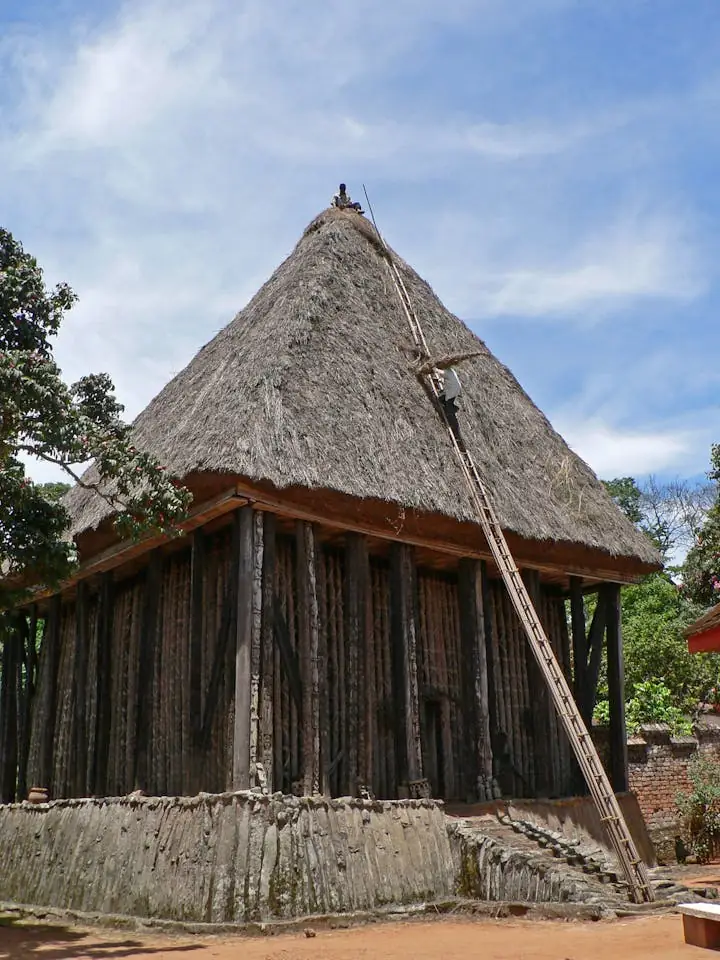
More than fifty buildings stand around one. The Achum is built of carved wood and bamboo under a thatched roof, and it holds the sacred object of the Fondom. Only the Fon and chosen members of the royal house may go inside. Ceremonies and festivals happen in the square that faces it.
It is among the finest surviving examples of Grassfields religious architecture, which is why the palace has been on UNESCO’s Tentative List since 2006 — a nomination stage rather than inscription.
It is also fragile in the most ordinary way. By 2007 many of the palace roofs had collapsed or were leaking badly. The conservation work that followed did the repairs and trained Bafut artisans to keep doing them, which is the only kind of preservation that lasts.
The palace now sits in the middle of the Anglophone conflict, degraded and at continuing risk. The building burned once already, in 1907, and was raised again within three years.